Showing posts with label K-drama. Show all posts

Friday, May 22, 2026

What is the Sacred Tree in Korean Folklore?

In a popular Korean drama based on a webtoon titled “Mystic Pop-Up Bar”, the female lead was so distraught by the injustice her family suffered that he committed suicide. She hung herself on the Sacred Tree. If she had picked another tree, perhaps her afterlife would have been different. But her death on the Tree caused the deaths of several other innocent souls. The spirits of the underworld punished her for over 500 years.

tree

The K-drama did not specify which sacred tree. In Korean folklore, the idea of a “Sacred Tree” usually refers not to one single mythic tree, but to a type of holy tree deeply woven into village spirituality and shamanistic tradition. The two most important concepts you’ll see are Dangsan Namu (당산나무) and Sinmok (신목) — both essentially “sacred trees” believed to house guardian spirits.


Dangsan Namu (당산나무) — the Village Guardian Tree

This is the most widely recognized “sacred tree” in Korean folklore. It’s typically a huge, ancient tree—often a zelkova, pine, or hackberry—standing at the entrance of a village. People believed it housed a guardian deity (Seonang or Seonghwang) who protected the community from misfortune, disease, and evil spirits. Mythlok

These trees are marked with a straw rope (금줄, geumjul) and white paper or cloth streamers to show their sacred status. Villagers held rituals there for protection, prosperity, and good harvests. shamanism.sgarrigues.net


Sinmok (신목) — the Sacred Spirit Tree

“Sinmok” literally means “divine tree.”
It’s another term for a sacred tree believed to contain a powerful spirit. In folktales, the Sinmok often connects heaven, earth, and the underworld, acting as a kind of Korean “world tree.” One story describes a Sinmok whose roots intertwine with protective totem poles (jangseung) to save a village from drought. kor-telling.com

🌳

It's likely that in the Korean drama “Mystic Pop-Up Bar,” the scriptwriters were referring to the Dangsan Namu — the village guardian tree. This is the tree most consistently treated as sacred, inhabited by a protective spirit, and central to community rituals.

K-dramas are always so educational and entertaining.

**

REFERENCES:

“Dangsan Tree.” NamuWiki, namu.wiki/w/당산나무. Accessed 2024.

“Sacred Trees and Stone Altars – Korean Shamanism.” Korean Shamanism, koreanshamanism.org/sacred-trees-stone-altars.

Nair, Nitten. “Dangsan Namu: The Sacred Guardian Trees of Korea.” Mythlok, mythlok.com/dangsan-namu.

“Seonangdang.” Grokipedia, grokipedia.com/seonangdang.


Saturday, May 9, 2026

Echoes of the Past: How Sungkyunkwan’s Legacy Shapes Modern Korea

K-drama lovers have probably watched this delightful series titled “Sungkyunkwan Scandal”.   For me, Korean dramas are both educational and entertaining. It turns out Sungkyunkwan is not fiction; it's real. It is an educational institution that still exists today, and it survives in two forms:

(1) Old Sungkyunkwan, the historic Confucian academy, founded in 1398, still stands in central Seoul as a cultural and ritual site.

(2) Sungkyunkwan University (SKKU), the modern research university reorganized after 1945, is now one of South Korea’s top institutions.


visitseoul.net
Image credit:  visitSeoul.net

♦ Origins (1398–1894): Korea’s Highest Confucian Academy

Sungkyunkwan’s founding — Established in 1398 by royal decree at the start of the Joseon dynasty, it served as the nation’s supreme educational institution and training ground for government officials. 

Key features:

  • Curriculum centered on the Confucian classics, literary composition, and preparation for the gwageo civil service exams. 

  • The student body, originally capped at 150, later expanded to 200 in 1429. 

  • Architecture followed geomantic principles: mountains behind, water in front, aligning with ideal energy flow. 

  • Munmyo Shrine on campus held biannual rites honoring Confucius — a tradition still maintained today. 

Notable alumni include major Confucian scholars such as YiHwang and Yi I, whose writings shaped Korean intellectual history. 

♦ 

Transition & Turbulence (1895–1945)

During the late Joseon reforms:

  • In 1895, Sungkyunkwan was reorganized into a modern three-year university, reflecting Korea’s modernization efforts. 

During Japanese colonial rule:

  • It was demoted and renamed Gyeonghagwon, with Korean Confucian education suppressed. 

  • Despite this, it remained a symbolic center of Korean Confucian identity.

♦ 

Modern Rebirth (1945–Present): Sungkyunkwan University (SKKU)

After Korea’s liberation in 1945:

  • The original name Sungkyunkwan was restored.

  • With nationwide Confucian support, it was reorganized into Sungkyunkwan University, now a comprehensive private research institution. 

Today SKKU:

  • Operates two campuses:

    • Seoul (Humanities & Social Sciences)

    • Suwon (Natural Sciences & Engineering) 

  • Has 34,000+ students and over 4,000 academic staff. 

  • Maintains the motto “Humanity, Righteousness, Propriety, Wisdom.”

  • Preserves the Old Sungkyunkwan buildings on its Seoul campus, integrating 600+ years of heritage with modern research. 

A major turning point came in 1996, when SKKU formed a strategic partnership with Samsung, accelerating its rise in science, engineering, and global rankings. 

⭐ Interesting Facts Across the Centuries

Confucian rites are still performed

Twice a year (May & September), SKKU hosts Seokjeon Daeje, a full Confucian ritual with traditional music and dance — one of the few surviving state rites in Korea. 

Oldest university in East Asia

SKKU traces its lineage back over 600 years, making it one of the oldest continuously operating educational institutions in East Asia. 

A blend of old and new

On the Seoul campus, you can walk from a 14th century Confucian lecture hall straight into a cutting edge glass library — a rare architectural juxtaposition.

Elite training ground

In the Joseon era, only the most promising scholars — often future ministers — could study here. Admission required passing the lower civil service exams. 

Modern powerhouse

SKKU consistently ranks among Korea’s top universities and is globally recognized in engineering, business, and natural sciences.

CONCLUSION:

Sungkyunkwan is real and absolutely still exists.
It survives both as a living Confucian heritage site and as Sungkyunkwan University, a major global research institution. Its story spans royal patronage, colonial suppression, postwar rebirth, and modern innovation — making it one of the most historically layered universities in the world.

***

REFERENCES/SOURCES:

Cultural Heritage Administration of Korea. “Seokjeon Daeje.” Cultural Heritage Administration, english.cha.go.kr. Accessed 9 May 2026.

Deuchler, Martina. The Confucian Transformation of Korea: A Study of Society and Ideology. Harvard University Asia Center, 1992.

Haboush, JaHyun Kim. Confucian Kingship in Korea. Columbia University Press, 2001.

Lewis, James B. “The Korean Civil Service Examinations.” Korean Studies, vol. 24, no. 2, 2000, pp. 1–30.

Palais, James B. Confucian Statecraft and Korean Institutions. University of Washington Press, 1996.

Sungkyunkwan University. “About SKKU – History.” Sungkyunkwan University www.skku.edu/eng/About/sungkyunkwan/history.do (skku.edu in Bing). Accessed 9 May 2026.

Seth, Michael J. A Concise History of Korea: From Antiquity to the Present. 3rd ed., Rowman & Littlefield, 2020.


Wednesday, January 31, 2024

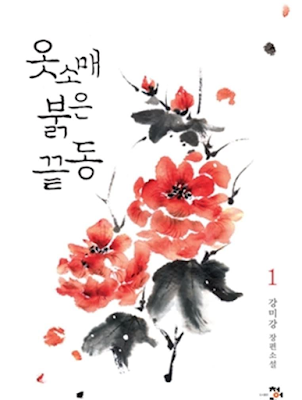
Historical Period Viki Original K-drama Series: The Red Sleeve (2021-2022); 17 episodes

The Red Sleeve Cuff (2021-2022); 17 episodes

This historical K-drama is a Viki Original series based on a novel of the same name. It's a fictionalized account of the love story of King Jeongjo and his royal consort Ui-bin Seong, but they are real historical figures. King Jeongjo is the 22nd monarch of the Joseon dynasty, and Ui-bin Seong (real name Seong Deok-im) was his royal consort. There were several pregnancies that resulted in miscarriages, one son lived, Crown Prince Munhyo.


This series focuses on the life of Seong Deok-im. She entered the palace at the age of ten (10) as a maid servant. Whereas all of the court ladies probably dreamed of being bedded by the king, Seong Deok-im rejected his advances. She did not want to become a concubine because she said she would no longer be able to have her own life. In other words, she would lose herself and only live for him.

Nevertheless, she fell in love with the king and became his favorite concubine, known as Royal Consort Sung Ui Bin. The series showed that she did give up her own life. When she was an ordinary court lady she could go out with friends, visit family, and enjoy the freedoms commoners enjoy. Once she became the king's concubine, her life was restricted to the palace. She spent the entire day just waiting for him to come to her chambers and rest his head in her lap. It was a life choice she made. Although she did not regret loving the king, she always knew she made a great sacrifice to live as the king's woman. She died in her early 30s and the king wrote on her epitaph about how much he had loved her.


P.S.  If you love Korean dramas, please visit my entertainment blog.  It has lots of K-Drama love.  
Original source.

Wednesday, May 31, 2023

Five (5) Korean Dramas That Are Less than 10 Episodes.

The popularity of Korean dramas continues to grow worldwide. Rakuten Viki does not only stream K-dramas but is investing in producing Viki Original content. Most fans of Korean drama have come to expect a series to be anywhere from 12 episodes to 50+ episodes. Believe it or not, there are some enjoyable series that are less than 10 episodes. Here is a list of five Korean dramas that are less than 10 episodes. All of these are streaming on the Viki platform.


Hyang Dan (2007) ~ 2 episodes

This is the story of how Hyang-dan (played by Seo Ji-hye), a beautiful servant girl, fell in love with the man who would become the hero of the people known as Il Ji Mae. 

Splash Splash Love (2015) ~ 2 episodes

A cute time-travel K-drama. Jang Danbi (played by Kim Seul-gi) is a high school student who wishes she could avoid a math test. She jumps on a puddle of water that turns out to be a portal. She time-travels back to the Joseon era and falls in love with the king. 

Must You Go? (2021) ~ 8 episodes

A time-travel drama based on a webtoon. Min Yoo Jung (played by Park Jung Yeon) dreams of becoming a successful pop musician. A talented musician from the Joseon Era ends up in modern-day Korea and crosses her path. Not sure how he got there or if he can return, he decides that he has the skills and talents to help her fulfill her dream. It turns out, however, that he is not the only time traveler. 

Strong Underdog (2023) ~ 6 episodes

Jung Woo (played by Lee Dae Hwi) is a high school student who is constantly bullied and has all kinds of bad luck. He just wants to persevere long enough to graduate. But he meets a transfer student who inspires him to stand up for himself. He decides to participate in a school's fighting tournament with the goal of taking down the school’s biggest bully. 

Finland Papa (2023) ~ 6 episodes

A Viki Original series. Yu Ri (played by Kim Bo Ra) is grieving over the loss of her grandmother. Depression is overwhelming her and she finds it difficult to carry on. A childhood friend encourages her to apply for a job at a restaurant called Finland Papa. It changes her life. 

Original source

Thanks for reading.

3

Sponsors