Showing posts with label flowers lovers. Show all posts

Thursday, April 16, 2026

T is for Throwback Thursday and Tulips

Happy Thursday!
In some social networks or communities, people participate in something called “throwback Thursday”. Ever heard of it? It’s when you share a memory (or something that provokes a memory) of something way back or a throwback to your past.

Most of the time my shares are music videos. But I found this lovely photograph on Tumblr. Photographer Ellen Ericsson shared a picture of tulips.


How is it a throwback?
Well! We enjoy lovely springs here in Austin, Texas, and a myriad of flowers can be seen everywhere. But the tulips are a throwback to when we lived in Maryland. Used to work in the nation’s capital, Washington, D.C. If you want to work in an environment that will toughen you up and make you see the world as it really is, then D.C. is the place to get a job. It will make you wise to the ways of the world.

But let’s not get off-topic.

Springtime in D.C. is also beautiful because of the cherry blossoms. People even plan their vacations around the blooming of the cherry blossoms. They are glorious!

But springtime in Maryland, in the town of Damascus where I lived (1988 – 1995), will always be remembered because of the gorgeous tulips. Many of my neighbors loved to plant tulips in the garden – all different colors. They were magnificent!

Thank you, Ms. Ericsson, for this awesome throwback.

You made my day!
Pink Tulips | Photography | Ellen Ericcson


(Republished from partner blog.)


Sunday, April 12, 2026

Fringed Mariposa Lily: A Rare Wildflower Most People Have Never Heard Of

Calochortus fimbriatus, sometimes called the Fringed Mariposa Lily, is a little‑known wildflower native to the Santa Ynez Mountains of California.🌼 

  • FUN FACTThe petals of this flower are covered in tiny, silky hairs that actually glitter in the sunlight — almost like the flower is dusted with gold.  These hairs aren’t just for show; botanists believe they help attract specific native pollinators by reflecting light in a way that makes the bloom stand out in dry, rocky habitats.  It’s one of the reasons hikers sometimes describe spotting it as “finding a jewel in the chaparral.”

Most people have never heard of it. It’s rarely seen because it grows in limited, rugged habitats and blooms only under the right seasonal conditions. Its fringed petals and striking yellow‑and‑brown coloration make it look almost unreal.  (REF:  yankeebarbareno.com)

  • Grows in the wild — not a cultivated garden flower**
  • Extremely localized — found only in a small region
  • Unknown to most people — overshadowed by more famous rare flowers
  • Visually stunning — the kind of bloom you’d never guess exists until you see it

**On the plus side: You can grow the Fringed Mariposa Lily (Calochortus fimbriatus) in a home garden, but it’s not as straightforward as typical ornamentals. It’s a specialty bulb that needs conditions similar to its native California chaparral. If you can mimic those, it will reward you with spectacular blooms.

Gardening Advice and Tips:

🌱 It can be grown in a home garden, but only if you can provide the right climate and soil conditions.

Calochortus species are famously picky. They thrive in dry summers, mild wet winters, and fast‑draining soil. If your climate is similar to coastal or inland California, you’re in great shape. If not, you can still grow it in containers with more control.

🌼 What it needs to survive

1. Mediterranean-style climate

  • Wet, cool winters
  • Hot, dry summers
  • No summer irrigation once bulbs go dormant
    If you live somewhere humid or rainy in summer, containers are the safer option.

2. Excellent drainage

This is non-negotiable.
Think rocky, sandy, gritty soil — the kind water runs through instantly. Heavy soil will rot the bulbs.

3. Full sun

They need bright light to bloom well.

4. Dry summer dormancy

After flowering, the plant dies back completely.
You must stop watering during this period.

5. Protection from overwatering

Most failures come from too much moisture.

🌿 Grow in the ground or in a pot?

In the ground — good if:

  • You live in California or a similar climate
  • You have naturally sandy or rocky soil
  • You can guarantee dry summers

In a pot — better if:

  • Your summers are rainy or humid
  • Your soil is clay or loam
  • You want to move the plant to a shelter during dormancy
CHECKLIST!
  • Grow it in containers
  • Use cactus or alpine soil mixes
  • Keep it dry after flowering
  • Avoid fertilizing (they prefer lean soil)

🌸 Is it beginner-friendly?

NO!  (Just keeping it real. 😁)

It’s moderately difficult, but not impossible. If you succeed, you'll have bragging rights!

🌼 GUESS WHAT??  IT'S EDIBLE!🌼 

The Fringed Mariposa Lily (Calochortus fimbriatus) is considered edible, but with important context.**

🌱 What part is edible?

Across the Calochortus genus, the bulbs are edible. This is documented in botanical references that group Calochortus fimbriatus with other mariposa lilies whose bulbs were traditionally eaten by Indigenous peoples. North Carolina Extension Gardener Plant Toolbox Santa Monica Mountains Trails Council

🍽️ How were they traditionally used?

⚠️ Important cautions

Even though the bulbs are technically edible, there are reasons not to harvest or eat them today:

  1. Calochortus fimbriatus is a rare, California‑endemic species
    It has a conservation status of 1B.3 (rare, threatened, or endangered).
    Eating or digging up bulbs would harm wild populations.
    Calflora

  2. Wild harvesting is ecologically damaging
    Removing bulbs kills the plant outright.

  3. Identification risks
    Many lilies are toxic; misidentification can be dangerous.

🌼 Bottom line

  • Edible in principle (bulbs), based on genus‑level documentation.
  • Not recommended to eat — especially C. fimbriatus, which is rare and protected.

But if you have to choose between starving AND surviving, ...(Just keeping it real. 😁)

  • NOTE:  In my family, my late mother had the green thumb.  Her plants and flowers always made the yard at my childhood home look amazing.  Whenever I get an opportunity to share info about flowers and plants, I post the content in memory of my mom.

**

Additional Reading:

Hodsdon, Edward. “The 25 Rarest Flowers in the World.” Petal Republic, 30 Jul. 2022, https://www.petalrepublic.com/rarest-flowers-in-the-world/.

Santillo, Susan. “12 Rare Flowers That Are Almost Impossible to Find.” Plantisima, 19 Mar. 2025, https://plantisima.com/rare-flowers-that-are-almost-impossible-to-find/.

Moulton, Madison. “29 Rare Flowers With Names and Pictures.” Botanicalinterests.Com/Community/Blog, 11 Apr. 2025, https://www.botanicalinterests.com/community/blog/rare-flowers/.

Green, Jennifer. “24 Rare American Flowers (That May Not Be Around Much Longer).” Positivebloom, 6 Mar. 2025, https://positivebloom.com/rare-american-flowers-that-may-not-be-around-much-longer/.

Thursday, April 2, 2026

Flowers in Scripture That Refer to (or Symbolically Foreshadow) Jesus Christ 🌸

Spring is the time of the year for flowers, and in particular, the months of March and April celebrate Jesus Christ and His sacrifice for humanity.  The Bible contains many flowers and images of flowers that are used directly or symbolically in connection with Jesus Christ.  Behold the beauty of Christ.

lily

1. Lily

Biblical references:
Song of Solomon 2:1–2; Hosea 14:5; Matthew 6:28–29

Connection to Christ:
In Song of Solomon, the beloved is compared to a lily. While the original context is romantic poetry, Christian interpretation has often seen the Bridegroom as a type of Christ. In Hosea 14:5, God says of restored Israel, “He shall blossom like the lily,” which many Christians read as pointing to the Messiah’s purity and beauty. Jesus Himself references lilies when teaching about God’s provision, which believers connect to His own divine care.

Symbolic themes: purity, beauty, divine provision.

rose

2. Rose / Rose of Sharon

Biblical reference:
Song of Solomon 2:1

Connection to Christ:
The text says, “I am the rose of Sharon,” spoken by the bride or bridegroom, depending on interpretation. Christian theology has historically applied this to Christ as the fairest, most beloved, and most fragrant among God’s people.

Symbolic themes: loveliness, uniqueness, the beauty of the Messiah.

almond blossom

Flowering Plants or Blossoms Used as Messianic Imagery

These are not always “flowers” in the modern gardening sense, but Scripture uses imagery of blossoming and botany to describe the Messiah.

3. The Branch That Blossoms

Biblical references:
Isaiah 11:1; Jeremiah 23:5; Zechariah 6:12

Connection to Christ:
These are explicit messianic prophecies fulfilled in Jesus. While they do not name a specific flower, the imagery is botanical and often pictured as a flowering branch. Jesus is the righteous Branch from the line of David and Jesse.

Symbolic themes: new life, kingship, restoration.

4. Almond Blossom

Biblical reference:
Numbers 17:8

Connection to Christ:
Aaron’s rod miraculously “sprouted, put forth buds, produced blossoms, and bore ripe almonds.” Early Christian readers saw this as a type of Christ’s resurrection—life springing from what was dead. Almond blossoms also appear in the design of the lampstand (Exodus 25), which many connect to Christ as the Light of the World.

Symbolic themes: resurrection, priesthood, divine election.

5. Blossoms on the Vine

Biblical reference:
John 15:1

Connection to Christ:
Jesus says, “I am the true vine.” While the passage does not explicitly mention flowers, a vine naturally produces blossoms before fruit. The image emphasizes that all true spiritual life and fruitfulness flow from union with Christ.

Symbolic themes: spiritual life, fruitfulness, union with Christ.

Summary

Category Flower / Plant Scriptural Basis Connection to Christ
Direct floral imagery Lily Song 2:1–2; Hosea 14:5; Matthew 6:28–29 Purity, beauty, divine care
Direct floral imagery Rose / Rose of Sharon Song 2:1 Beauty, belovedness
Flowering prophetic imagery Branch (blossoming) Isaiah 11:1; Jeremiah 23:5; Zechariah 6:12 Messiah, kingship, restoration
Flowering prophetic imagery Almond blossom Numbers 17:8 Resurrection, priesthood
Botanical metaphor Vine (implied blossoms) John 15:1 Life-giving union and fruitfulness in Christ

ADDITIONAL REFERENCES:

  • Brown, Raymond E. The Birth of the Messiah. Doubleday, 1993.
  • Keener, Craig S. The IVP Bible Background Commentary: New Testament. InterVarsity Press, 1993.
  • Ryken, Leland, et al., editors. Dictionary of Biblical Imagery. InterVarsity Press, 1998.
  • Wright, N. T. Jesus and the Victory of God. Fortress Press, 1996.

Thank you for visiting. B.O.B. (Blessings on Blessings.)🌸 

Friday, February 13, 2026

Floral Diversity: Home and Garden: Gardening Recommendation for Those Who Love Red

Red is my favorite color, and when I see flowers like the one in the image below, it's my favorite color even more! This heart-shaped flower is called Anthurium. They grow in other vibrant colors; not just red. It is also known as Laceleaf. They bloom all year long. If you plan to add these to your garden here are a few tips. 

"Caring For Anthurium Growing In The Garden Or Home"

anthurium

"Anthurium is one of the most popular houseplants. Attractive to look at, easy to look after, and brings with it a real personality into the home, which gives a serene feeling in white, whilst the brightly coloured varieties have a lively appearance. Although most people think that the coloured part is the flower, it’s actually a coloured bract. Anthurium flowers are very small and are all found on the spike."
SOURCE:  The story of Anthurium | Hot Plants and Flowers | Hot & Happening | Magazine Sections | Magazine | Fusion Flowers Magazine Floral Design Arranging and Books | Fusion Flowers

"The anthurium flower is known universally as a symbol of hospitality, as this exotic beauty thrives in nearly any location in the home or office. ... As a potted plant, the anthurium plant symbolizes abundance and happiness to the home."
SOURCE:  Anthurium Flower Meaning - Flower Meaning

"According to legend in fact in ancient Greece, the flowers of Anthurium were Cupid's arrows, or the god of love, who could make people fall in love. Despite the history of flower lovers, Anthuriums have begun to be a symbol of Christmas festivities just like poinsettia and fir."
SOURCE:  Anthurium : Perfect Houseplant for Gifting – RollingNature


Monday, January 26, 2026

Floral Diversity: Why I Love the Jasmine Flower

There are three (3) reasons why I love the jasmine flower.

  • Number 1: I love the fragrance.
  • Number 2: When I lived in Miami, Florida, I had a Cuban friend named Jasmine (or Yasmin).
  • Number 3: I like Disney Princess Jasmine.
Yasmin (Arab) or Yasamen (Persian) means “fragrant flower” and the name comes from the Persians and the Arabs.

white jasmine

Do you know how many types of Jasmine flowers there are? According to the Garden Lovers Club, even though there are 200 different species, you can narrow it down to ten (10) types.
1. Common jasmine
2. Arabian Jasmine
3. Asian Star jasmine
4. Cape Jasmine
5. Jasminum mesnyi
6. Night-Blooming Jasmine (Queen of the Night)
7. Pink Jasmine
8. Showy jasmine
9. Spanish jasmine
10. Winter jasmine

I am familiar with Cape Jasmine, but not by that name. What some people call Cape Jasmine, I call Gardenia.

The jasmine flower that I am most familiar with is Common Jasmine, which is a pretty star-shaped dainty little white flower that can make anyone's garden look amazing. This dainty little lady really gets around. “Originally native to Persia and Kashmir, and brought to Europe in quantities via Spain in the 17th century, Jasmine has a long and rich history in several cultures.”

~ The ancient Arabs believed that paradise must have been a place full of jasmine flowers.

~ Historical records indicate that the kings of Persia, Nepal, and Afghanistan had jasmine flowers planted around their palaces.

~ Arabian jasmine is the national flower of the Philippines.

~ Jasmine is also the national flower of Pakistan (but they call it Chameli).

~ In India, the flower is considered a sacred symbol of divine hope, good luck, and optimism. Many references are made to jasmine in the literature of ancient India. There is a reference to this flower in the Kamasutra as an aphrodisiac. It is used in Ayurvedic medicine for migraines, insomnia, and to treat certain skin infections.

~ In China, it represents feminine kindness, grace, and delicacy, and they believe it is a means to attract love and wealth. (In other words, it's an aphrodisiac.) The Chinese use it to scent their green tea and in Chinese medicine to treat headaches, bone pain, and insomnia.

~ In Thailand, it is the symbol of motherhood.

~ To the Indonesians, the flower represents purity, eternal life, nobility, and the beauty of a girl. It is often used in wedding ceremonies and it is a national flower.

~ For centuries, Spanish Jasmine has been cultivated in France and used to make perfumes, and it is vital to the French economy.

~ For commercial purposes (mainly the perfumery industry), jasmine is grown in Egypt, Morocco, and Algeria.

~ In Hawaii, jasmine is called pikake and the flowers are used to make leis or as a garnish for pastries; while the oil is used in aromatherapy.

~ While researching to prepare this article I learned about a movie called “Jasmine Flower” which stars one of my favorite Asian actresses, Joan Chen. Added to my watch list. Has anybody seen this movie?

Jasmine is called the King of Oils and the Queen of Flowers.

Both honors are fitting. Don't you think so?

Original Source


Monday, January 19, 2026

Floral Diversity: Let's Learn About the Hyacinth Flower

Two topics that a person can always seem to write about are food diversity and floral diversity. I decided to explore floral diversity and share the results.


The first flower that comes to mind that begins with the letter “h” is the Hibiscus flower because I grew up in Miami, Florida and almost everybody had these flowers in their yard.  But I have written more than enough about this lovely bloom from my childhood and published the writing at various social blogging and online writing communities. So I won't write another article about the hibiscus.

Instead I am going to discuss the Hyacinth.


Hyacinth
~ The fact that this is one of my favorite flowers has nothing to do with it being a flower. I love British comedy TV shows. There is one show called “Keeping Up Appearances” and the name of the main character is Hyacinth. The lady who plays the part is Patricia Routledge or should I say, Dame Katherine Patricia Routledge, DBE. Evidently, she is a well-known comedic entertainer in the UK. I only know her from this television series and she is flipping hilarious! Because of her, the flower named hyacinth was added to my list of favorite flowers.

According to the Britannica Encyclopedia, this flower is native primarily to the Mediterranean region and tropical Africa. According to an article published via Old House Gardens, the hyacinth dates back to ancient antiquity and has made its way through gardens in ancient Greece and Rome, and into the Ottoman Empire and eventually into Western Europe. Here is an interesting fact gleaned from that article:

“There is convincing evidence that the hyacinth was cultivated by the Turks for both its fragrance and for ceremonial usage. On the death of Sultan Moerad III in 1595 his mourning son had no fewer than half a million hyacinths planted.”

I was required to learn the history of Western Europe in Catholic high school. But not much was ever taught about the Ottomans other than the fact they existed.

One must be careful because the hyacinth bulbs are poisonous. They contain oxalic acid and so you should handle them wearing protective gloves. The uncooked seeds are poisonous, however, the beans of these plants can be used in cooking. They can be boiled or roasted and you can find many Indian food recipes that use hyacinth beans. (Recipes.) As you can see by the featured image they are a marvelous ornamental flower. But they also have proven medicinal value. In addition to being used for beauty ~ skincare and hair care ~ it has been used to treat cholera, snake bites, and even STDs (sexually transmitted diseases). In traditional Chinese medicine, the beans are used to keep the spleen healthy.

There is a sad story in Greek mythology about a young man named Hyakinthos or Hyacinthus. That's how the flower got its name. As for its symbolism, it has come to “represent prayers, thoughtfulness, messages of hope and well-being”.

Interesting flower huh?


References:

Doerflinger, Frederick. “The Hyacinth Story.” Hyacinth History, Old House Gardens, 1989, oldhousegardens.com/HyacinthHistory. "from Adsurgens, the journal of Wycliffe Hall Botanical Gardens, 1989"

Gayatri. “11 Amazing Benefits Of Hyacinth Herb For Skin, Hair And Health.” STYLECRAZE, IncNut Digital, 6 June 2019, stylecraze.com/articles/benefits-of-hyacinth-herb-for-skin-hair-and-health/.


Sunday, January 18, 2026

Floral Diversity: High School Memories and Porcupine Quills

Years ago when I attended Catholic high school they sponsored what's called a “Retreat”. It's an event where you just … get away! It lasted for about a week. You don't have to go to class, you have no access to telephones or television or radio. Back then we didn't have cell phones or the Internet or video games. The Retreat was for spiritual growth and spending quiet moments in meditation and praying to God. We had group sessions where we candidly discussed our thoughts and read scriptures.


And since it was a bunch of silly immature high schools girls stuck in one place with not much to do you could visit each other's rooms, have pajama parties and pillow fights, style each other's hair, paint each other's nails, and stay up most of the night laughing and talking about insignificant things. We could do that until the nuns came and told is we had to turn off the lights and go to sleep. LOL.


The place where the retreat was held was absolutely mind-blowing. I wish I had taken a photograph. But cameras were also not allowed. One thing I remember was a particular flower that grew in the garden. I had never seen it before and nobody seemed to know the name. When asked to describe it, I said “It's looks like pretty pink porcupine quills with white and gold tips.”


Well! Thanks to the Internet, I found a photo of that lovely flower and it brought back some nice memories. The flower is called Crimson Bottlebrush. OK. Yeah. It sort of looks like a bottlebrush. LOL.


Image credit: KeiraSoleore on Twitter

Hope your day is as lovely as this flower.

***

How to Grow Bottlebrush | Gardener’s Path 


Original source

Monday, January 12, 2026

Floral Diversity: Sunflowers and Why I Don't Worry About a Thing

The late Bob Marley (1945 - 1981) used to sing a song called “Three Little Birds”. I love the beginning lyrics because they help me face the day.

"𝘋𝘰𝘯'𝘵 𝘸𝘰𝘳𝘳𝘺 𝘢𝘣𝘰𝘶𝘵 𝘢 𝘵𝘩𝘪𝘯𝘨 '𝘊𝘢𝘶𝘴𝘦 𝘦𝘷𝘦𝘳𝘺 𝘭𝘪𝘵𝘵𝘭𝘦 𝘵𝘩𝘪𝘯𝘨 𝘨𝘰𝘯𝘯𝘢 𝘣𝘦 𝘢𝘭𝘭 𝘳𝘪𝘨𝘩𝘵 ...” 🎶🎵 

I thought 2020 would be the year I would never forget because that was the year the COVID pandemic was announced and everything went on lockdown. By the end of that year I was totally ready to kick 2020 to the curb! Grrrr … !!

But then … 2021 came and for the first time in history, the entire state of Texas was told to brace for a snow storm. WHAT??? From Grrr …!! TO Brrr...!! It was brutal!

I survived the Winter of 2021. I don't really remember the Spring of 2021. But the Summer of 2021 came and we were told to be brace for heat!

Guess what? The summer of 2021 was one of the mildest summers in Texas that I had ever experienced. It felt like spring. The best part? Sunflowers were blooming all over the place!

"𝐌𝐨𝐫𝐞 𝐬𝐮𝐧𝐟𝐥𝐨𝐰𝐞𝐫𝐬 𝐚𝐫𝐞 𝐛𝐥𝐨𝐨𝐦𝐢𝐧𝐠 𝐢𝐧 𝐓𝐞𝐱𝐚𝐬 𝐭𝐡𝐢𝐬 𝐲𝐞𝐚𝐫 𝐟𝐨𝐫 𝐯𝐞𝐫𝐲 𝐬𝐮𝐫𝐩𝐫𝐢𝐬𝐢𝐧𝐠 𝐫𝐞𝐚𝐬𝐨𝐧𝐬"


(Image credit: texastraveltalk.com)

I wonder if that was God's way of telling me:
"𝘋𝘰𝘯'𝘵 𝘸𝘰𝘳𝘳𝘺 𝘢𝘣𝘰𝘶𝘵 𝘢 𝘵𝘩𝘪𝘯𝘨 '𝘊𝘢𝘶𝘴𝘦 𝘦𝘷𝘦𝘳𝘺 𝘭𝘪𝘵𝘵𝘭𝘦 𝘵𝘩𝘪𝘯𝘨 𝘨𝘰𝘯𝘯𝘢 𝘣𝘦 𝘢𝘭𝘭 𝘳𝘪𝘨𝘩𝘵 ...” 🎶 🎵 🌻 😊 ❤️️

 
 * * *


Sunday, January 11, 2026

Floral Diversity: Flower Spotlight: Cape Primrose

One of the most amazing things about planet Earth is its floral diversity. Some sources say there are 400,000 flowering plant species on Earth. I have no official qualifications to say this. I am not a botanist or anything like that. But only 400,000? That number sounds kind of low. Whether it's an accurate count or not, we can agree that there are at least a bazillion flowers on planet earth, and that includes the hybrids. LOL.

This short post shines the spotlight on Cape Primrose.

Cape Primrose

Cape Primrose is a flower that has several species and is native to South Africa. One doesn't usually associate fairies with Africa, but somehow, people have associated these flowers with fairies. There is a whimsical belief that fairies care for them. What do they symbolize? Just about everything one would desire in this life. Perfect health. Good luck. A brand new start in life. Spiritual paths that lie ahead. Purity. Honesty. But most importantly, love.

FUN FACT: Cape Primrose is a cousin of African violet. 

The Cape Primrose is an easy flowering houseplant that blooms in colors of shades of violet, pink, crimson, blue, violet, and white.

Streptocarpus - The Cape Primrose | plantcaretoday


I often write about flowers. It's one of my favorite things. If you liked this post, you might also like:

Friday, December 12, 2025

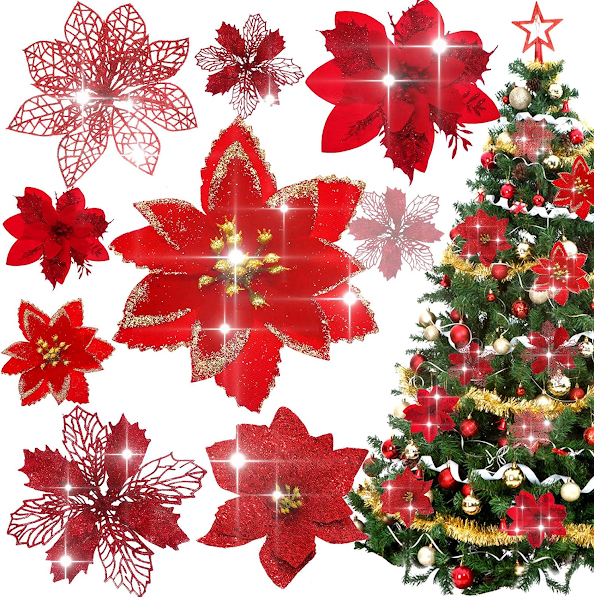
Floral Diversity: Did You Know the History of the Poinsettia Flowers has Texas Ties?

Poinsettias: Texas' Mark on the Festive Flower

‘Tis the season of anticipation, and all around us are signs of the upcoming celebration.  In church courtyards, three wise men eagerly look upon still-empty mangers. Elsewhere, some unsuspecting Texans have already seen their first snowfall of the season – or even the decade.  All across the state, Christmas lights twinkle at nightfall, while during the day, vibrant red poinsettias keep the mood merry and bright.


Image credit:  glitter-graphics.com

Poinsettias have become a staple of the season, but did you know the Christmas flower has ties to the Texas border?

xmas decorations


In 1825, President John Quincy Adams appointed the first U.S. Minister to Mexico: Joel Roberts Poinsett.  Poinsett traveled south to Mexico with the task of renegotiating the U.S.-Mexico border and bringing Texas into the U.S. once and for all.  At that time, the southern border of the U.S. sat at the Red River, north of modern-day Texas. President Adams dreamed of the United States extending all the way south to the Rio Grande River, and he was willing to pay one million dollars for that prize.

Of course, Mexico saw great value in Texas and did not budge.

Unfortunately for him, Poinsett never succeeded in his mission of purchasing Texas.  However, during his failed attempt in moving the U.S.-Mexico border, the amateur botanist discovered a plant near Taxco de Alarcón so beautiful that he cut its stems and had them sent back home to the United States.

He mailed the vibrant red blooms to friends, fellow botanists, and botanical gardens across the country, and by 1836 – the very same year Texas won its independence from Mexico – the flowers had become widely known across the country not by their scientific name (Euphorbia pulcherrima), but by the name of the diplomat who brought them here: poinsettias.

Today, Texas is a top poinsettia producer, although cultivating the red Christmas poinsettias is no easy feat. To grow the brightest blossoms, poinsettias require at least five consecutive twelve-hour nights and warm, bright sunny days.  These plants still grow best in the Taxco region of Mexico, where Joel Roberts Poinsett found them almost two centuries ago, and where they’re still known as Flores de Nochebuena (Christmas Eve flowers).  Texas’ own native poinsettia has a distinct splash of red-orange, and is therefore aptly called the “Painted” Poinsettia or the “Fire on the Mountain” Poinsettia.


During Christmastime in Texas, poinsettias of all kinds adorn town squares, gardens, and homes.  In Big Spring, Texas, the annual ‘Poinsettias in the Park’ attraction features multiple enormous metal poinsettias wrapped in Christmas lights.  The Concho Christmas Celebration is also known for its life-like poinsettia light exhibit.  And the winter wonderland display at the Gaylord Texan hotel in Garland, Texas boasts more than 2,000 live poinsettias in all.


As you see these famed poinsettia displays and others in Texas this season, I hope you’ll take a moment to remember their history.  To all Texans who produce, decorate with, and admire the beauty of poinsettias, I wish you and your family a very merry Christmas.

Original article published via The Lonestar Weekly rec'd via eMail

Senator John Cornyn info@cornyn.senate.gov


glitter-graphics.com

Friday, January 6, 2023

Floral Diversity's Finest! Electric Blue Lotus Lily AND The Stealth flower, Courtesy of Linda Stokes, Talented Photographer

Never been to Oklahoma. Evidently, I didn't know what I was missing. Back in 2014, when the Google+ social network was still up and running, some Google Plussers were in a flower photo-sharing frenzy, and I came across a lady, Linda Stokes, who shared photographs of floral diversity's finest!  What was even more amazing was ... the flowers grow in Oklahoma!

Sorry.  I grew up in Florida.  Florida!  The word literally means "abounding in flowers"!  I have never seen gorgeous blooms like these!  Oklahoma means "red people" (Choctaw words "okla" and "humma").  I'm perfectly OK with that.  (No pun intended.)  But these flowers are blue!! 


https://texaxwib.tumblr.com/post/705752241893736448/via-linda-stokes-on-instagram-reflection

***

Electric Blue Lotus Lily (Nymphaea caerulea)

  1. Not Uniformly Electric Blue: The real Nymphaea caerulea—sometimes marketed as “electric blue lotus”—doesn’t normally have neon-blue flowers. Authentic petals show a gradient from pale lavender toward deeper violet-blue at the edges and have a faint honeyed scent, while extremely bright blue hues in products often indicate dye or mislabeling. 

  2. Distinct from Sacred Lotus: The blue lotus lily is botanically distinct from the sacred lotus (Nelumbo nucifera). The sacred lotus often has pink or white blooms, whereas the blue lotus (N. caerulea) is a water lily species native to the Nile River basin. 

  3. Alkaloid Content Varies Widely: Studies and lab testing show that many commercially sold “blue lotus” products may lack authentic alkaloids (like nuciferine and apomorphine), with significant variation depending on origin and processing, so identifying the correct species and sourcing is important. 


Stealth Flower 

The "Stealth flower" photographed blooming at night near Loco, Oklahoma, by Linda Stokes is a Night-Blooming Cereus (Epiphyllum oxypetalum). Also known as "Queen of the Night," this rare, fragrant, white cactus flower blooms only for one night, typically opening around dusk and wilting by dawn.


📚 Sources

Alibaba. “How to Choose the Best Blue Lotus Flower Dried: A Complete Buyer’s Guide.” Alibaba.com Product Insights, 2026, https://www.alibaba.com/product-insights/how-to-choose-the-best-blue-lotus-flower-dried-a-complete-buyer’s-guide.html.

Alibaba. “How to Choose Real Blue Lotus: A Complete Buyer’s Guide.” Alibaba.com Product Insights, 2026, https://www.alibaba.com/product-insights/how-to-choose-real-blue-lotus-a-complete­-buyer’s-guide.html

Articles of Interest for Aspiring Photographers:


**

Best cameras for newbie photographers

Thursday, May 17, 2018

Talented Photographers : A Red Rose and the Flower of Passion ~ A Perfect Couple

The flower of passion is a climbing plant. When paired with this rose, they make a perfect couple.  Photo by txatxy, an amateur photographer who lives in Spain. 

via Joie de Vivre Magazine

~ Source: Virily
Shared via Pinterest: http://ift.tt/2hPJyoi


  • Are you an artist or a photographer? 
  • Are you looking for a lovely site where you can showcase your talent and your marvelous works?


Sponsors